Nyerere and Ruaha Safari Report: A Southern Tanzania Field Story
Seven days between the waterways of Nyerere and the baobab landscapes of Ruaha: a personal account of changing habitats, patient observation and the photographic character of two remarkable wilderness areas.
This is the account of a completed journey, not a booking page. Current dates, availability, inclusions and travel conditions are presented on the dedicated Nyerere and Ruaha photographic safari page .
Two parks and two very different visual languages
Southern Tanzania reveals itself gradually. It does not always offer the immediate spectacle associated with the best-known safari circuits. Instead, it asks you to slow down, read the landscape and allow smaller details to become part of the story.
This journey began among the channels, lakes and floodplains of Nyerere National Park before continuing west to the drier and more rugged scenery of Ruaha. The flight between the two parks covered a relatively short distance, yet the photographic transition was profound.
Water, reflections and dense riverine vegetation gradually gave way to dry riverbeds, red earth, rocky hills and monumental baobabs. The animals remained important, but the landscapes changed the way every encounter could be photographed.
The route behind the story
This journey connected Dar es Salaam with Nyerere and Ruaha by light aircraft. The original route map shows the transition from the waterways of Nyerere National Park to the baobabs, dry riverbeds and rugged landscapes of Ruaha National Park.
Waterways, riverine forest and the rhythm of the Rufiji
Nyerere introduced the journey through water and movement: channels, floodplains, birds, crocodiles, hippos and elephants moving between woodland and river.
Arrival in a landscape shaped by water
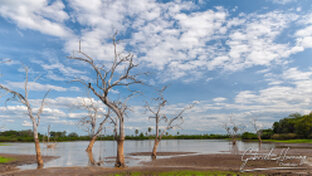
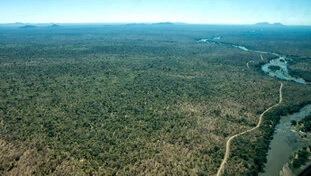
The morning flight from Dar es Salaam revealed the structure of Nyerere from above. Woodland was interrupted by rivers, lakes and pale floodplains, making it immediately clear that water would define the first part of the journey.
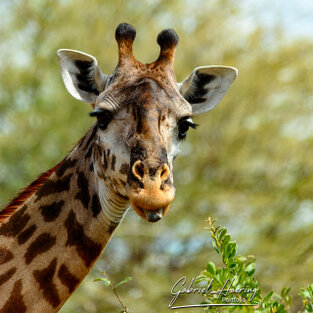
During the afternoon drive, giraffes and antelope appeared between the trees while elephants moved closer to the watercourses. As the sun lowered, the light became warmer and more directional, giving shape to dust, skin and vegetation.
The many layers of the Rufiji River
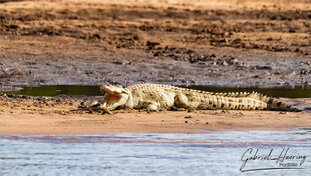
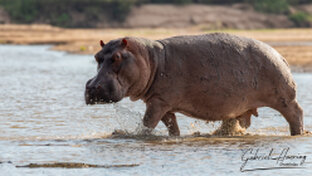
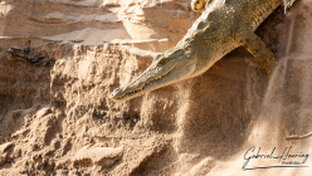
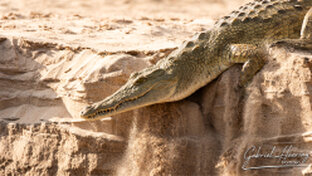
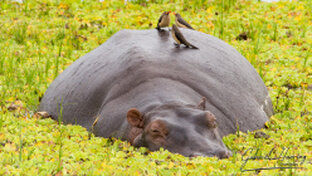
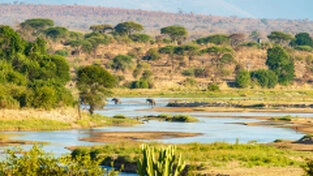
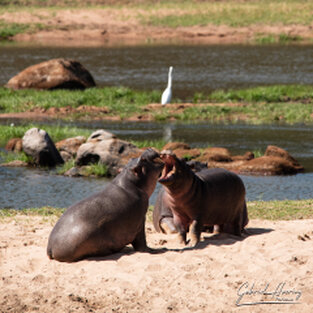
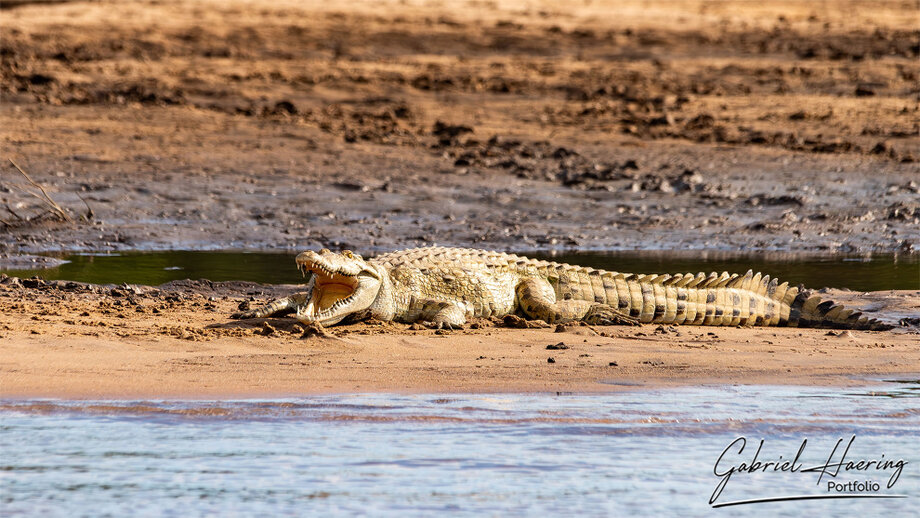
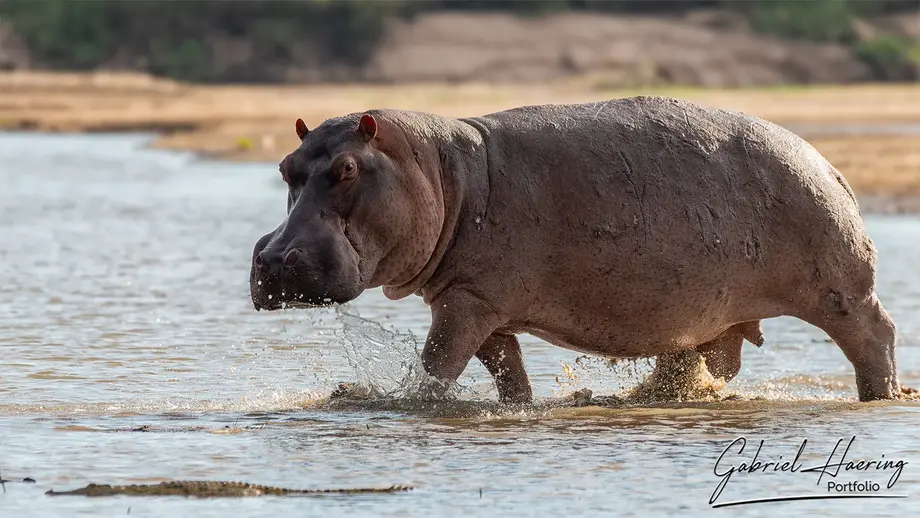
The Rufiji system is not a single visual subject. It is a network of channels, sandbanks, lakes and changing margins. Fish eagles watched from exposed branches, crocodiles rested on pale banks and hippos surfaced through the remaining morning mist.
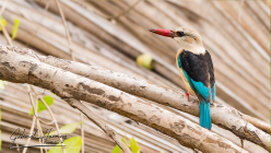
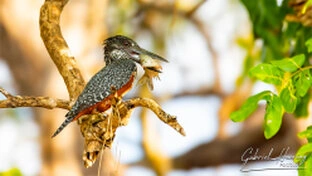
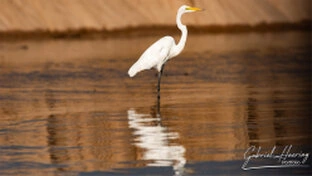
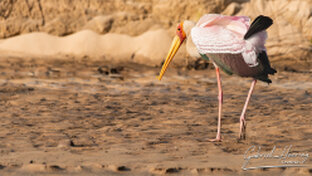
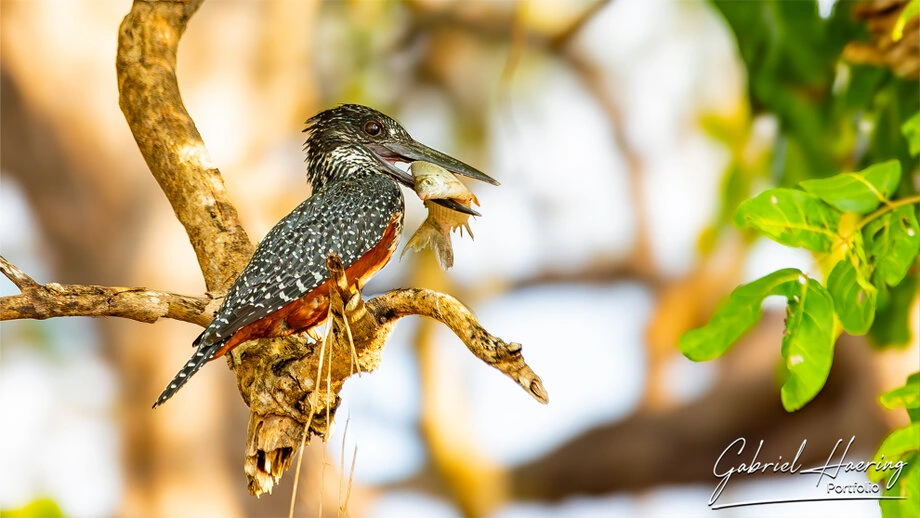
Kingfishers, bee-eaters, storks and herons created constant photographic possibilities. Some encounters lasted only seconds; others rewarded waiting and observing how a bird repeatedly used the same perch or flight path.
A final morning before the landscape changes
The last Nyerere drive began with the softer light of early morning. Lions were active before the heat increased, while elephants moved through open areas close to the riverine vegetation.
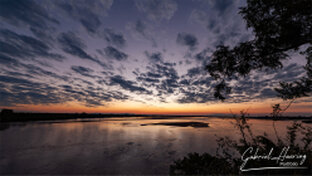
By then, the most valuable lesson was already clear: photographs of Nyerere become stronger when the animal is allowed to remain connected to its habitat. Water, reflections and vegetation are not background decoration; they are part of the subject.
Flying from Nyerere to Ruaha was more than a transfer between parks. It was a transition from water and reflections to stone, dust, baobabs and a much wider sense of space.Field notes · Southern Tanzania
Baobabs, dry riverbeds and the scale of wilderness
Ruaha changed the visual rhythm of the journey. Its open spaces, rocky terrain and ancient trees encouraged wider compositions and a more deliberate use of landscape.
Learning to see the park within the photograph
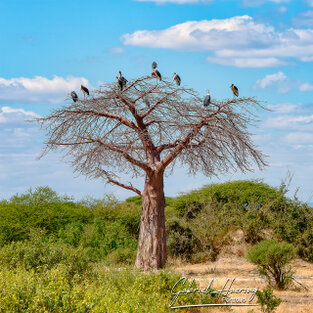
Ruaha’s first impression came through its scale. Massive baobabs rose above the bush, dry riverbeds cut through the land and rocky hills created a series of natural layers.
Elephants, giraffes and birds were present throughout the day, but the relative absence of other vehicles changed the experience. There was time to watch how an animal moved through the landscape instead of concentrating only on the closest portrait.
Lions, dust and directional light
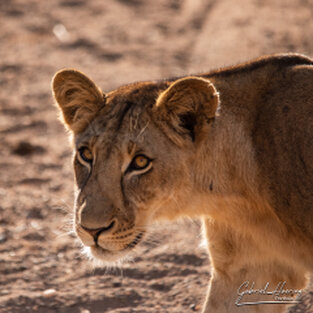
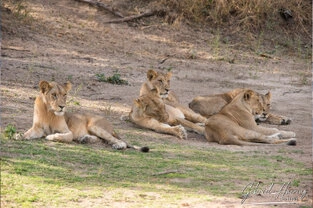
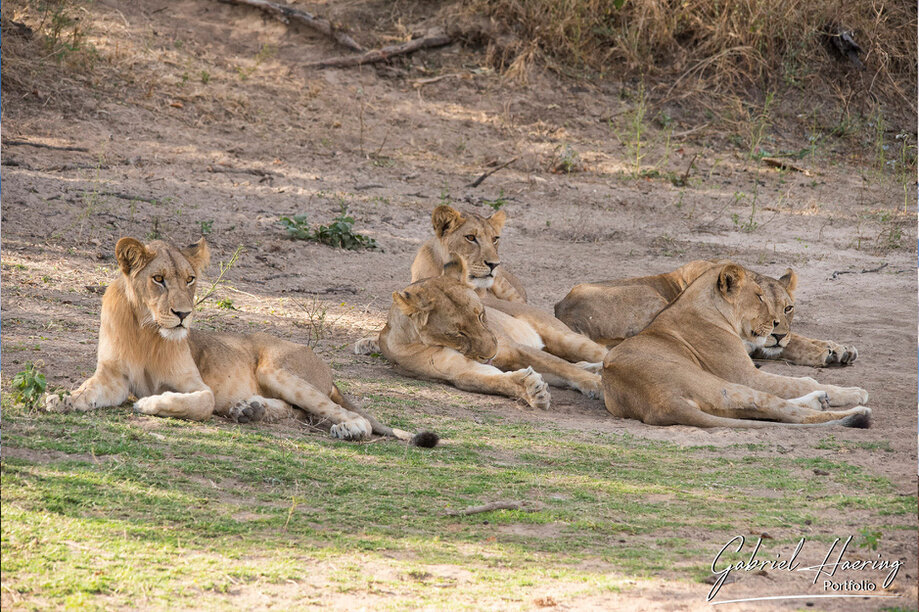
A pride of lions near a dry riverbed provided one of the strongest behavioural encounters of the journey. The photographic challenge was not simply to record the cats, but to anticipate movement, separate individuals and retain enough of the environment to convey where the scene occurred.
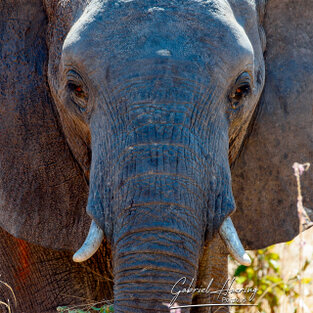
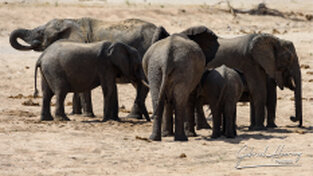
Later, elephant groups moved through red dust. Backlight and side light transformed the airborne particles into part of the composition, giving otherwise familiar subjects a distinctly Ruaha atmosphere.
Character rather than a checklist
The sixth day was less about searching for a specific animal and more about recognising the park’s character. Baobabs were revisited in changing light, and time was spent observing elephants, antelope and birds within wider compositions.
These quieter hours often produce the most personal images. Without the pressure to move immediately to the next sighting, it becomes possible to explore scale, negative space and the relationship between an animal and its surroundings.
The final drive and the return to Dar es Salaam
A final morning drive offered one last opportunity to work with the landscape before the return flight. By this point, the images were no longer isolated records of sightings. Together they described a transition between two ecosystems.
Reviewing the photographs confirmed the contrast: Nyerere had been defined by water, reflections and layered river habitat, while Ruaha had been shaped by baobabs, dry light, predators and space.
What changed between Nyerere and Ruaha?
The value of combining the two parks was not simply the number of species encountered. Each environment required a different way of seeing and composing.
Water, reflections and layered habitat
Nyerere encouraged attention to waterways and the relationships between animals, vegetation and river systems.
- Rufiji channels, lakes and floodplains
- Crocodiles, hippos and river-associated wildlife
- Kingfishers, bee-eaters, storks and herons
- Reflections and softer transitions of light
- Complex, layered environmental compositions
Baobabs, dust and a stronger sense of scale
Ruaha invited wider compositions in which animals became part of a rugged and immediately recognisable landscape.
- Ancient baobabs and rocky escarpments
- Dry riverbeds and open woodland
- Lions, elephants and large-scale wildlife scenes
- Dust illuminated by warm directional light
- Space, solitude and wilderness atmosphere
What this journey taught photographically
A safari report becomes useful when it explains not only what was seen, but how the experience influenced the resulting images.
Include the habitat
A portrait identifies the animal. A wider composition can also explain the ecosystem, season and atmosphere of the encounter.
Patience beats a checklist
Remaining with a subject often reveals behaviour and visual relationships that would be missed by constantly searching for the next sighting.
Small subjects matter
Birds, river details, tracks and changes in light help create a more complete visual narrative than large mammals alone.
Adapt to the place
Nyerere and Ruaha cannot be photographed in exactly the same way. Each park has its own rhythm, backgrounds and visual language.
A journey remembered through contrasts
Nyerere remained in my memory through its waterways, floodplains, reflections and the constant presence of birds. Ruaha remained through its baobabs, drier light, predators and extraordinary sense of scale.
Together they formed a coherent story. The journey moved from fluid landscapes to rugged ones, from intimate river details to wide views of animals beneath ancient trees.
Southern Tanzania does not need to compete for attention by being louder. Its strength lies in depth: time to observe, room to compose and the possibility of returning home with photographs that describe more than a succession of sightings.
It is not a louder safari. It is a deeper one.Gabriel Haering
This story complements the current journey
This report records the landscapes, encounters and photographic observations from a completed trip. It is intended to help readers understand the character of Nyerere and Ruaha before considering a future journey.
For current dates, itinerary structure, accommodation, inclusions, availability and enquiries, use the dedicated safari page. Keeping those details separate ensures that this report remains an editorial account rather than a duplicate booking page.